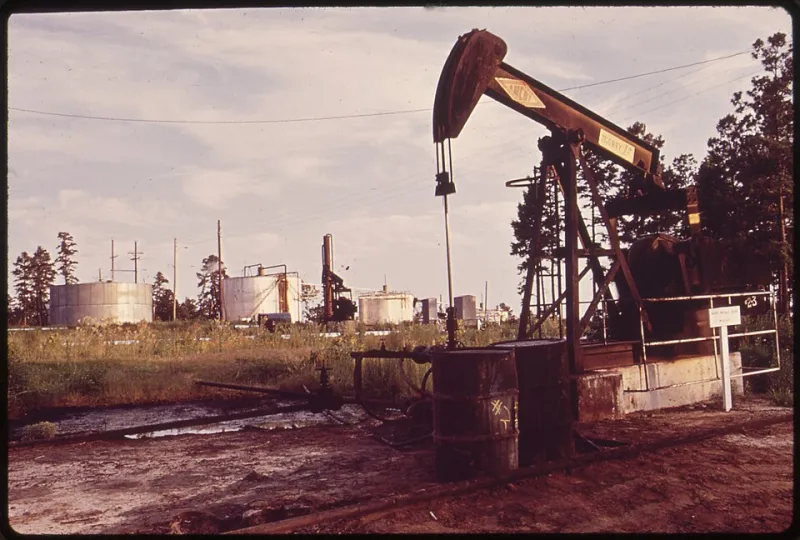
Hedging the Future: How Bakken Energy Companies Are Building Portfolios That Outlast the Oil Age
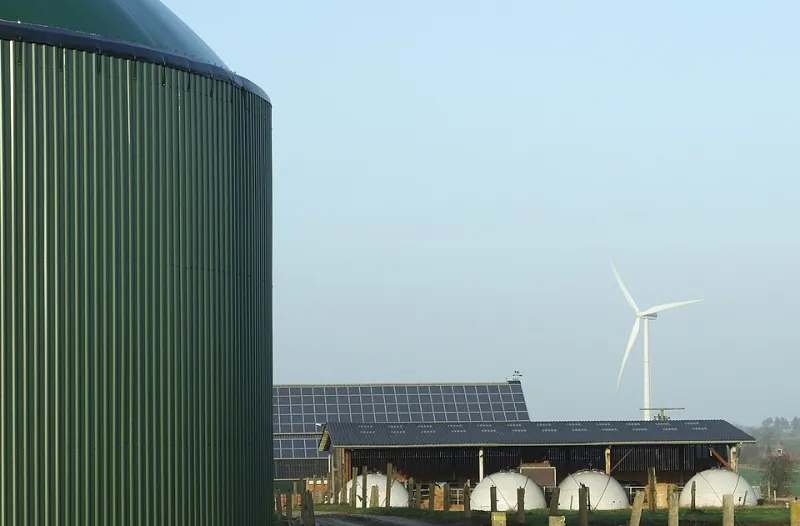
Photo: Florian Gerlach (Nawaro), CC BY-SA 3.0, via Wikimedia Commons
There is a phrase that circulates quietly among the more forward-looking executives in the Bakken energy community: produce what the market demands today, invest in what it will demand tomorrow. It is a deceptively simple formulation for what is, in practice, an extraordinarily complex strategic challenge—one that is reshaping how regional energy companies think about capital allocation, corporate identity, and long-term value creation.
The Bakken formation will remain a vital contributor to US energy supply for decades. That much is not seriously disputed. But the executives leading the region's most durable companies are increasingly unwilling to stake their entire futures on a single commodity in a world where energy demand patterns, investor expectations, and regulatory frameworks are all in motion simultaneously. The response, for a growing cohort of Bakken operators, is deliberate diversification—building adjacent capabilities and revenue streams that can sustain enterprise value regardless of which energy future ultimately materializes.
The Investor Pressure That Quietly Changed Everything
To understand why diversification has moved from boardroom abstraction to operational reality, it is useful to examine the capital markets context that surrounds Bakken producers. Over the past five years, institutional investors—pension funds, university endowments, large asset managers—have applied increasing pressure on energy companies to articulate credible long-term strategies that account for energy transition risk.
This pressure has manifested in multiple forms: ESG scoring frameworks that influence index inclusion and cost of capital, shareholder resolutions demanding emissions reduction commitments, and direct engagement from major institutional holders who want to understand how management teams are thinking about the durability of their business models under various climate scenarios.
For publicly traded Bakken operators, ignoring these signals is not a neutral choice. A company that cannot articulate a coherent transition strategy faces a narrowing investor base, a higher cost of equity, and reduced access to certain debt markets. Privately held operators face a different but related pressure: the private equity firms and family offices that back many independent producers are themselves fielding questions from their own limited partners about portfolio-level energy transition exposure.
In this environment, strategic diversification is not merely an idealistic gesture toward a greener future. It is a pragmatic response to the financial architecture within which modern energy companies must operate.
Carbon Capture: The Logical First Step for Hydrocarbon Producers
Among the diversification pathways being pursued by Bakken-linked companies, carbon capture, utilization, and storage—commonly abbreviated as CCUS—has emerged as perhaps the most natural fit. The logic is straightforward: operators with deep subsurface expertise, existing infrastructure relationships, and established regulatory experience are better positioned than most to evaluate and develop carbon sequestration projects.
The geology of the Williston Basin, which underlies the Bakken play, includes deep saline aquifers and depleted reservoirs that have attracted serious attention from carbon storage developers. Several companies with operational roots in the region have begun feasibility assessments or early-stage development work on sequestration projects that could eventually generate revenue through the 45Q federal tax credit framework—a mechanism that provides per-metric-ton incentives for captured and stored CO2.
For an operator already managing subsurface assets and maintaining relationships with state regulators in North Dakota, the incremental capability required to pursue carbon storage is meaningful but not insurmountable. Several regional players have begun building internal expertise in this area, recognizing that early positioning in a nascent market carries significant strategic advantage.
Beyond storage, some operators are exploring carbon utilization pathways—using captured CO2 for enhanced oil recovery operations, which simultaneously improves production economics and reduces net emissions. This approach has the appeal of generating near-term revenue while building the operational infrastructure and regulatory track record that more ambitious sequestration projects will eventually require.
Wind and Solar: Unlikely Complements to an Oil Play
North Dakota's energy identity is inseparable from its hydrocarbon heritage, but the state also possesses some of the strongest wind resources in the continental United States. That geographic reality has not been lost on energy executives looking for diversification opportunities with favorable economics.
Several companies with Bakken operational backgrounds have either invested in or developed wind energy projects within the region. The strategic rationale extends beyond simple revenue diversification. Operators with large surface footprints—whether through mineral ownership, surface leases, or pipeline right-of-way agreements—possess land access advantages that pure-play renewable developers often lack. Converting that existing access into wind or solar development rights represents a form of asset monetization that requires relatively modest incremental capital.
There is also an operational electricity demand angle worth considering. Bakken production operations consume significant amounts of power—for compression, water handling, artificial lift, and facility operations. Operators who develop on-site renewable generation capacity can reduce their exposure to grid power costs, improve their emissions profiles, and in some cases generate excess power that can be sold back to regional utilities or used to supply neighboring operations.
The economics of this approach have improved substantially as wind and solar development costs have declined. What would have been a marginal investment thesis five years ago is considerably more compelling today, particularly for operators with access to favorable land positions and existing utility interconnection infrastructure.
Midstream and Adjacent Infrastructure: The Quiet Diversification Play
Not all diversification in the Bakken context involves clean energy. A number of operators have expanded their strategic footprint by investing in midstream infrastructure—gathering systems, processing plants, water handling networks—that generates fee-based revenue largely independent of commodity price fluctuations.
This model is not new, but it has taken on renewed strategic relevance as operators seek to stabilize cash flows and reduce the earnings volatility that makes energy stocks unattractive to a broad investor base. Midstream assets generate predictable, contract-backed revenue that can support consistent capital returns to shareholders—dividends, buybacks—even when oil prices create uncertainty on the upstream side.
Some operators have taken this logic further, investing in produced water recycling and disposal infrastructure that serves not only their own operations but those of neighboring producers. As water handling costs represent a meaningful component of Bakken lifting expenses, companies that control this infrastructure possess both a cost advantage and a revenue opportunity.
Building a Portfolio, Not Just a Strategy
What distinguishes the most sophisticated diversification efforts from mere headline generation is the degree to which they are integrated into a coherent portfolio logic rather than assembled as disconnected experiments. The companies generating the most credible transition narratives are those that can demonstrate how their various investments—hydrocarbon production, carbon management, renewable energy, midstream infrastructure—reinforce one another and collectively reduce enterprise risk.
This portfolio approach requires a different kind of management capability than traditional upstream operations demand. It requires executives who can evaluate investment opportunities across multiple sectors, manage relationships with a broader set of stakeholders, and communicate a complex strategy clearly to investors, employees, and communities.
The Bakken has always produced tough, adaptable operators. The current moment is demanding a new form of adaptability—one that preserves the operational excellence that made the region a global model for unconventional production while simultaneously building the strategic breadth that the energy transition requires.
At The Bakken Conference, these strategic questions occupy an increasingly prominent place in our programming and conversations. The energy leaders who gather here understand that the decisions made in the next several years will shape the industry's trajectory for a generation—and they are approaching that responsibility with the seriousness it deserves.