Friction as Fuel: How Midstream Constraints Are Opening Doors for Bakken's Mid-Sized Independents
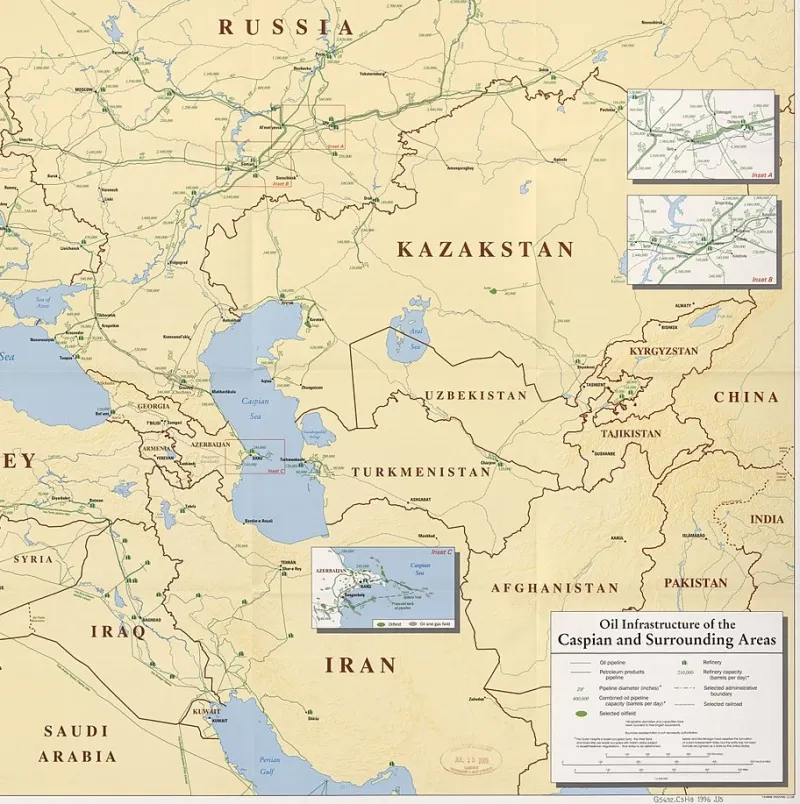
Photo: United States. Central Intelligence Agency, Public domain, via Wikimedia Commons
For years, the conversation around Bakken midstream capacity has centered on scarcity — insufficient pipeline throughput, congested gathering systems, and the chronic mismatch between production ambition and physical infrastructure. Larger producers, with their contractual leverage and dedicated capacity agreements, have historically absorbed these constraints with relative ease. But for mid-sized independents operating in the margins of the region's logistics ecosystem, the calculus is changing in ways that deserve closer examination.
What once appeared to be a structural disadvantage — limited access to long-haul pipeline commitments — is quietly becoming a source of strategic agility for operators willing to think beyond the traditional takeaway model.
The Infrastructure Gap That Refuses to Close
North Dakota's Williston Basin sits at a persistent tension point between production growth and export infrastructure. Despite significant midstream investment over the past decade, takeaway capacity periodically tightens when drilling activity accelerates or when unexpected disruptions ripple through the pipeline network. The result is a two-tiered market: operators with firm transportation agreements move crude at predictable costs, while those without face differential exposure, spot-rate volatility, and occasional forced curtailments.
The dynamics are not new, but their consequences have evolved. As the largest Bakken producers have locked in long-term pipeline commitments — often at rates that reflect their volume commitments rather than spot economics — smaller operators have found themselves navigating a more fluid, and in some respects more interesting, logistics environment.
That fluidity, it turns out, carries real optionality.
Rail, Trucks, and the Return of Flexible Logistics
When pipeline access tightens, alternatives emerge. Rail remains one of the most consequential. The Bakken's crude-by-rail infrastructure, built out aggressively during the shale boom years, never fully disappeared after pipeline expansions reduced its dominance. Today, several loading terminals across western North Dakota continue to serve operators who either lack pipeline access or who find that rail economics — particularly to West Coast refineries or Gulf Coast destinations that pipeline routes don't efficiently serve — make commercial sense.
For mid-sized independents, rail offers something pipelines cannot: destination flexibility. A producer who can redirect crude to a higher-netback refinery in response to regional price signals holds a form of optionality that dedicated pipeline shippers, bound by their contracts, simply do not possess. This flexibility has real dollar value, particularly during periods when Bakken differentials to WTI widen and basis risk becomes a meaningful earnings variable.
Trucking plays a complementary role, particularly for gathering-stage logistics in areas where pipeline density remains thin. While trucking economics deteriorate quickly at scale and over distance, the model supports smaller pad developments and acreage positions that haven't yet justified permanent gathering infrastructure. Several mid-sized operators in the basin have structured arrangements with regional haulers that provide cost-effective first-mile solutions while they await gathering system buildout — or while they evaluate whether that buildout is warranted at all.
Temporary storage has also gained renewed relevance. Lease automatic custody transfer units, portable tank batteries, and short-term storage agreements with midstream providers give operators a buffer against short-duration congestion events without requiring long-term capital commitment. These tools are modest in isolation, but in combination they create a logistics toolkit that allows a disciplined mid-sized operator to manage throughput without the overhead of a major pipeline position.
Negotiating Leverage in a Constrained Market
Perhaps the most underappreciated dimension of midstream constraint is its effect on commercial negotiations. When pipeline capacity is fully subscribed and gathering companies are competing for incremental volumes, operators who bring new production to the table — even at moderate scales — gain negotiating leverage they might not otherwise possess.
Several mid-sized Bakken independents have used this dynamic to negotiate gathering and processing agreements on terms that would have been unavailable during periods of midstream overcapacity. Reduced minimum volume commitments, more favorable fee structures, and in some cases equity participation in gathering assets have all been reported as outcomes of negotiations conducted during tighter infrastructure windows.
This is not a guaranteed outcome — midstream providers retain significant structural power in markets where alternatives are limited — but operators who approach these conversations with a clear understanding of their logistics alternatives and a credible willingness to pursue them often find more room to negotiate than the conventional wisdom suggests.
What This Means for Infrastructure Investment
The persistence of midstream friction in the Bakken carries implications for the region's longer-term infrastructure investment outlook. When constraints are severe enough to affect production economics meaningfully, they attract capital — both from established midstream companies seeking to expand existing systems and from new entrants looking to build gathering and processing capacity in underserved areas.
For mid-sized independents who have developed acreage in corridors that remain infrastructure-light, this creates a potential path to partnership. Operators who can demonstrate production potential and offer anchor volumes to a new gathering project are positioned to negotiate infrastructure terms that effectively subsidize their own logistics costs while enabling broader development.
The pattern is not unique to the Bakken — it has played out in the Permian, the DJ Basin, and other shale plays — but the Williston Basin's geographic concentration and the maturity of its core development areas create specific conditions where targeted infrastructure additions can generate outsized returns for both midstream investors and the producers who anchor them.
The Competitive Advantage Hidden in Inconvenience
There is a broader strategic lesson embedded in the Bakken's midstream story. Constraints that impose costs on the entire market tend to disadvantage the least-prepared operators most severely while rewarding those who have invested in logistics flexibility and commercial creativity. The pipeline bottleneck is, in this sense, a filter — one that separates operators who have built genuine operational resilience from those who assumed the infrastructure would always be there when they needed it.
Mid-sized independents who have navigated this environment successfully share a common characteristic: they treat logistics not as a back-office function but as a strategic discipline. They understand their alternatives, they maintain relationships across the midstream ecosystem, and they approach capacity negotiations with the same rigor they apply to drilling programs and land acquisition.
In a basin where the easy barrels have largely been drilled and competitive differentiation increasingly comes from operational and commercial execution, that discipline is worth considerably more than it might appear on a balance sheet.
The Bakken's midstream constraints are unlikely to resolve entirely in the near term. But for the operators who have learned to work within them — and occasionally around them — that persistence is less a problem than a continuing source of competitive advantage.