Small by Design: Why Bakken Independents Are Choosing Agility Over Empire in 2025

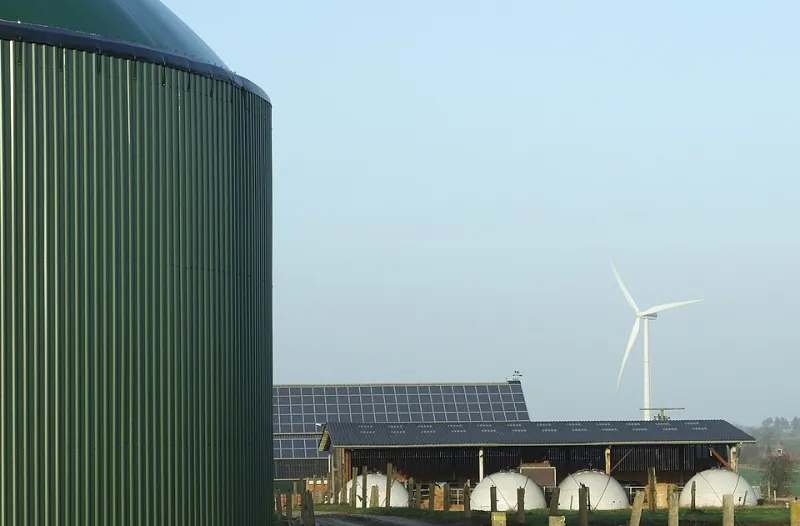
Photo: Greg Goebel from Loveland CO, USA, CC BY-SA 2.0, via Wikimedia Commons
The energy industry's merger mania has become difficult to ignore. From multi-billion-dollar acquisitions in the Permian Basin to portfolio reshuffling across the Gulf Coast, consolidation has dominated boardroom conversations and financial press coverage alike. Yet in the Bakken — that sprawling, frost-bitten formation stretching across North Dakota and into Montana — a quieter, contrarian strategy is taking hold.
Across western North Dakota's oil patch, a growing cohort of independent and mid-sized producers is doubling down on the advantages of staying small. Rather than viewing scale as the inevitable end goal, these operators are treating organizational agility as a competitive asset in its own right. The question is whether this philosophy holds up under the pressures of 2025's regulatory climate, commodity volatility, and shifting investor expectations.
The Case Against Getting Bigger
Conventional wisdom in the energy sector has long equated size with stability. Larger companies, the argument goes, can absorb commodity price swings more easily, negotiate better service contracts, and spread fixed costs across a broader production base. On paper, those advantages are real.
But operators working the Bakken's distinctive geology tell a more complicated story. The formation is not monolithic. Reservoir quality, well spacing requirements, and production profiles vary considerably across the play, and managing that variability demands local knowledge that doesn't always survive corporate integration.
"When you merge two organizations, you don't automatically merge their institutional knowledge," said one North Dakota-based operator who has declined multiple acquisition overtures in the past two years. "You often lose it. And in a formation like the Bakken, that knowledge is genuinely hard to rebuild."
This perspective is not merely anecdotal. Several mid-sized Bakken producers have pointed to post-merger operational disruptions at larger competitors — delayed completions, increased well costs, and turnover among experienced field personnel — as cautionary examples of what scale can cost in practice.
Regulatory Tailwinds for the Independent Model
The current regulatory environment has added a layer of strategic nuance that is working, at least in some respects, in favor of smaller operators. North Dakota's regulatory framework has historically been more accommodating to independent producers than those in some other basins, and state-level energy policy continues to reflect the outsized economic role that smaller operators play in local communities.
Federal permitting dynamics have also shifted in ways that complicate large-scale portfolio management. Companies managing sprawling, multi-basin asset bases have found themselves navigating a patchwork of federal and state permitting timelines that can stall development programs and erode the capital efficiency advantages that consolidation is supposed to deliver.
Independents operating with a tighter geographic focus, by contrast, can build deeper relationships with state regulators, anticipate local permitting timelines with greater precision, and respond more quickly when regulatory windows open.
"We know every county commissioner and every district office contact by name," noted one mid-sized Bakken producer. "That's not a small thing when you're trying to move a drilling program forward on a tight timeline."
Capital Discipline as a Differentiator
Investor sentiment has evolved considerably since the capital-intensive boom years of the early 2010s. Today, institutional energy investors are placing a premium on capital discipline, free cash flow generation, and return of capital to shareholders — metrics on which lean, focused operators can compete effectively with their larger peers.
Independent Bakken producers have leaned into this shift. Without the overhead burdens of sprawling corporate structures, these companies can convert a higher proportion of operating cash flow into shareholder returns or targeted reinvestment. Several have quietly outperformed larger, consolidated competitors on a per-share basis over the past 18 months, drawing renewed interest from value-oriented institutional funds.
There is also a financing dimension worth noting. Smaller operators with clean balance sheets and high-quality Bakken acreage have found the reserve-based lending market more accessible than might be expected in a tightening credit environment. Lenders, it turns out, are willing to extend capital to operators whose asset quality and management depth they can assess with confidence — and a focused Bakken independent is often easier to underwrite than a sprawling multi-basin conglomerate.
Innovation Without the Integration Tax
One of the less-discussed costs of large-scale consolidation is what might be called the integration tax on innovation. When two organizations merge, engineering and operations teams spend months — sometimes years — harmonizing workflows, standardizing software platforms, and resolving procurement conflicts. During that period, the capacity for genuine operational experimentation often contracts.
Bakken independents, unburdened by those integration demands, have been free to pilot new completion technologies, experiment with data-driven well spacing models, and adopt emerging artificial intelligence tools on their own timelines. Several mid-sized operators have partnered directly with oilfield technology vendors to develop customized solutions tailored specifically to Bakken reservoir conditions — arrangements that would be difficult to sustain within a larger, more bureaucratic organizational structure.
"We can make a technology decision in a week that would take a major operator six months to approve," said one operations manager at a privately held Bakken producer. "That speed matters more than most people realize."
The Trade-Offs Are Real
Fairness requires acknowledging that the independent model carries genuine risks. Smaller operators have less financial cushion when commodity prices fall sharply, less leverage in service company negotiations during periods of high oilfield activity, and fewer options for portfolio optimization when specific acreage underperforms.
Access to capital markets can also become constrained during periods of broader energy sector stress, particularly for companies that lack the investment-grade credit ratings that larger, consolidated entities can more readily attain. And the talent acquisition challenge is real — recruiting experienced petroleum engineers and reservoir specialists to mid-sized companies in a competitive labor market requires deliberate effort and competitive compensation structures.
These are not trivial considerations. Operators who are choosing independence in 2025 are doing so with clear eyes about the challenges, not out of naivety about the advantages of scale.
A Distinct Strategic Identity
What distinguishes the most successful Bakken independents is not simply that they are small — it is that they are intentionally small. They have built organizational structures, compensation models, and operational philosophies specifically designed to extract maximum value from focused, specialized expertise rather than from portfolio breadth.
That distinction matters for how the broader energy industry should interpret what is happening in the Bakken. This is not a story about operators who failed to attract acquisition interest or who lack the ambition to grow. It is a story about companies that have made a deliberate strategic calculation: that in the current environment, the competitive advantages of agility, local knowledge, and organizational focus outweigh the theoretical benefits of consolidation.
Whether that calculation proves correct over a five- or ten-year horizon will depend on commodity prices, regulatory developments, and the pace of energy transition pressures that no one can predict with certainty. But as a strategic proposition for 2025, the case for staying independent in the Bakken is considerably stronger than the merger-dominated headlines suggest.