Owning the Pipe: Why Bakken Producers Are Cutting Out the Middleman and Building Their Own Logistics Networks
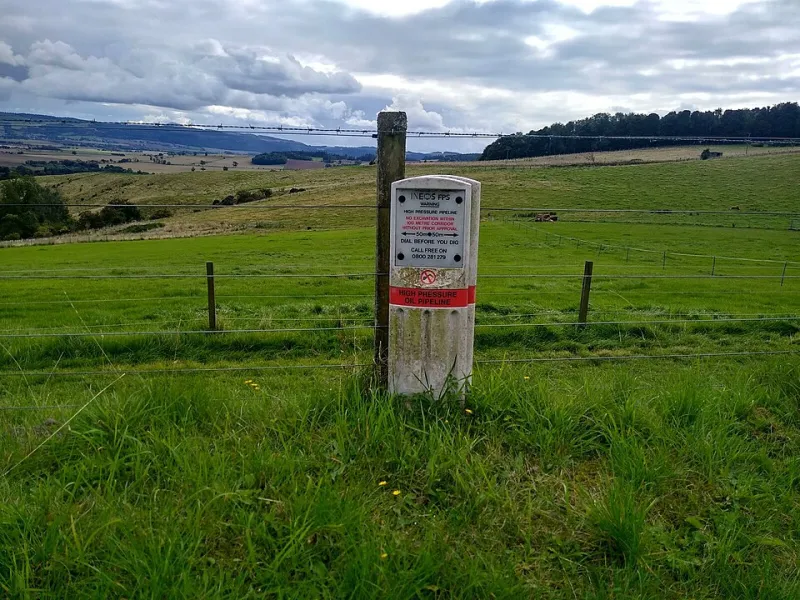
Photo: Aleks Scholz , CC BY-SA 2.0, via Wikimedia Commons
For years, Bakken producers have operated under a quiet but persistent tax on their profitability — one that never appears on a lease agreement or a royalty statement, yet shows up unmistakably on the bottom line. Midstream fees, gathering tariffs, and transportation differentials have collectively shaved meaningful dollars per barrel from operator netbacks, particularly during periods when crude prices leave little room for margin compression. Now, an increasing number of producers are concluding that the most effective way to solve a structural cost problem is to restructure the cost itself.
The strategy gaining traction across the basin is vertical integration — specifically, the direct ownership of gathering systems, trunk pipelines, crude-by-rail terminals, and ancillary logistics assets. Rather than paying third-party midstream companies for access to infrastructure those companies built on the back of long-term volume commitments, a segment of Bakken operators is choosing to deploy capital into the infrastructure itself. The move is not without risk, but for producers with sufficient scale and a long enough investment horizon, the arithmetic is becoming increasingly compelling.
The Midstream Fee Problem in Context
To understand why producers are willing to absorb the capital intensity of infrastructure ownership, it helps to quantify the pressure they are working against. Midstream gathering and processing fees in the Bakken have historically ranged from $4 to $8 per barrel of oil equivalent, depending on contract terms, geographic position within the basin, and the vintage of the agreement. For an operator running a breakeven cost structure in the low-to-mid $40s per barrel, that fee load represents a meaningful slice of the margin stack — one that compounds across thousands of barrels per day.
Beyond the direct cost, transportation constraints introduce a second dimension of risk: basis differentials. When Bakken crude cannot reach premium markets efficiently, it trades at a discount to West Texas Intermediate that can widen dramatically during periods of pipeline congestion or takeaway tightness. The 2018-2019 period, when Bakken differentials ballooned to more than $10 per barrel below WTI, remains a vivid reminder of what infrastructure dependency can cost when the system becomes constrained.
Third-party midstream contracts, while providing access certainty, often lock producers into volume commitments that penalize production flexibility. Minimum volume obligations can become liabilities when commodity prices fall and operators need to curtail output. Owning the infrastructure, by contrast, converts a variable operating cost into a fixed capital asset — one that generates value whether markets are strong or soft.
The Case for Proprietary Infrastructure
Several Bakken operators have moved deliberately in this direction over the past several years, constructing or acquiring gathering systems, building out produced water disposal networks, and in some cases developing crude-by-rail loading facilities to diversify takeaway optionality. The strategic logic follows a clear sequence: reduce per-unit transportation costs, gain flexibility in how and where crude is marketed, and capture the midstream margin that previously flowed to a third party.
For producers operating in core acreage positions with high well density, the economics of a proprietary gathering system can be particularly favorable. A dedicated low-pressure gathering network built to serve a concentrated development program eliminates the gathering fee entirely on gathered volumes, while also improving gas capture rates — a regulatory and reputational priority that has grown more significant as North Dakota tightens its flaring rules. The capital outlay is substantial, but the payback period on a well-utilized system in a productive area can be measured in a handful of years.
Crude-by-rail infrastructure represents a different but complementary avenue. Rail terminals provide access to coastal refinery markets that pipeline infrastructure does not always reach efficiently, allowing producers to capture West Coast or Gulf Coast pricing when regional differentials favor the arbitrage. Operators who own loading capacity rather than relying on spot access to third-party terminals have the ability to move volumes opportunistically — a flexibility that can generate significant realized price improvements over the course of a full commodity cycle.
The Capital Trade-Offs Are Real
Vertical integration into midstream infrastructure is not a decision that scales easily to all operators. The capital requirements are substantial, the construction timelines are measured in years rather than months, and the assets themselves carry different risk profiles than upstream drilling inventory. A pipeline or terminal is a long-lived, relatively illiquid asset — one that ties up capital that might otherwise fund additional well development.
For smaller independents operating on tighter balance sheets, the trade-off may simply not pencil out. The minimum scale required to justify a proprietary gathering system or a rail terminal generally implies a production base of several tens of thousands of barrels per day, along with a development runway long enough to amortize the infrastructure investment meaningfully. Below that threshold, negotiating more favorable terms with existing midstream providers or pursuing joint venture arrangements with peers may represent a more practical path to cost reduction.
There is also an operational competency consideration. Midstream infrastructure requires a distinct set of engineering, regulatory, and operational capabilities that not all upstream-focused organizations possess internally. Producers who move into infrastructure ownership typically do so by hiring experienced midstream talent or acquiring existing assets that come with an operational team — an added complexity that leadership must be prepared to manage.
Competitive Advantage Through Infrastructure Position
For those operators who do make the commitment, the competitive advantages can be durable and difficult for rivals to replicate quickly. A producer with a proprietary gathering system and direct pipeline access to multiple market hubs operates with a fundamentally different cost structure than a peer relying entirely on third-party services. That cost advantage translates directly into a lower breakeven price, greater resilience during downturns, and the ability to generate superior returns on capital across the commodity cycle.
Infrastructure ownership also creates a form of strategic optionality that purely upstream operators lack. A producer with excess gathering or terminal capacity can offer access to neighboring operators — effectively monetizing the infrastructure investment while also deepening relationships within the basin's producer community. In some cases, this has evolved into a modest midstream revenue stream that diversifies the company's earnings profile.
A Structural Shift in How the Basin Thinks About Value
The broader trend toward infrastructure self-reliance reflects a maturation in how Bakken producers think about value creation. The early years of the shale revolution were defined by the race to acquire acreage and drill wells. The current era is defined by the discipline to protect the economics of every barrel produced — and that discipline increasingly demands attention to what happens after the crude leaves the wellhead.
For energy leaders engaged with the Bakken's long-term trajectory, the infrastructure ownership question is no longer peripheral. It sits at the intersection of capital allocation, competitive positioning, and operational strategy — precisely the terrain where the basin's most successful operators will distinguish themselves in the years ahead.