The Integration Illusion: When Bakken Producers Discover That Owning Everything Costs More Than It Saves
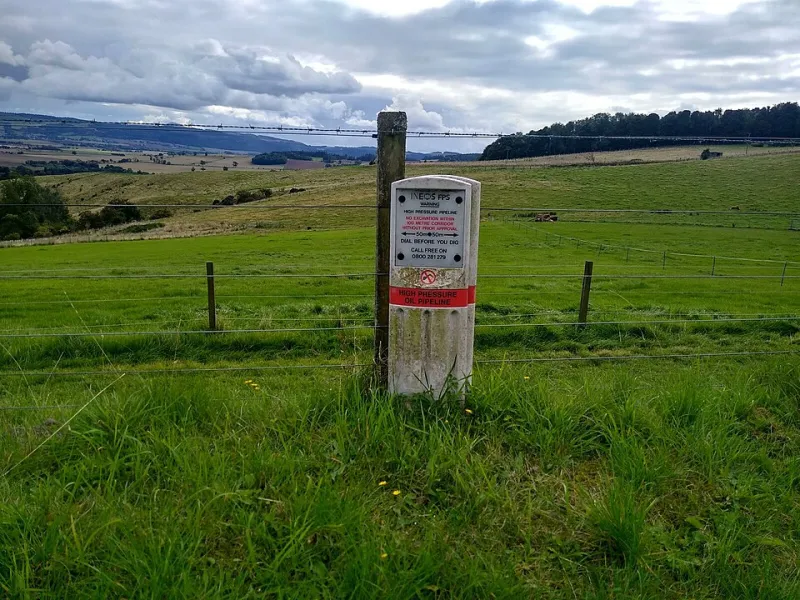
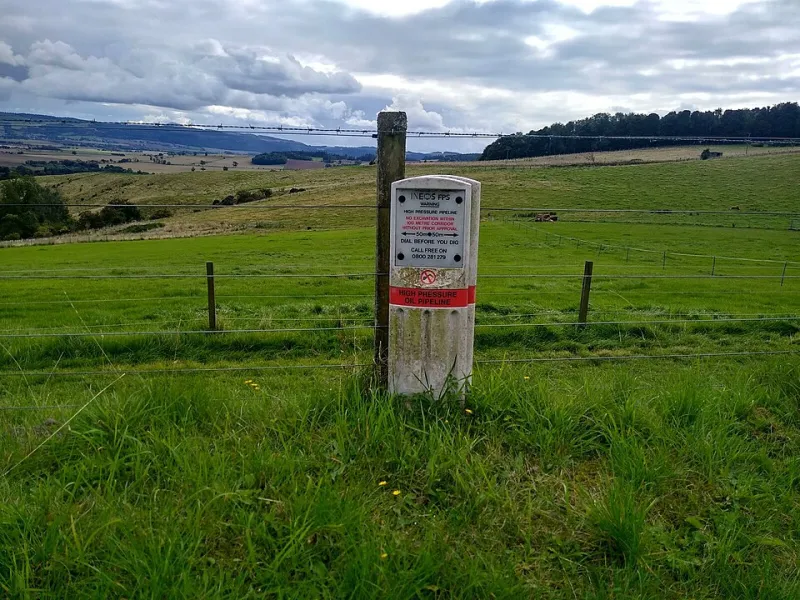
Photo: Aleks Scholz , CC BY-SA 2.0, via Wikimedia Commons
For much of the past decade, vertical integration has functioned as something close to gospel in Bakken boardrooms. The logic, on its surface, is compelling: if you control the pipe, the gathering system, and the processing facility, you capture margin at every stage of the value chain rather than surrendering it to a third party. You eliminate scheduling friction. You gain operational flexibility. You become, in theory, the master of your own destiny.
In practice, however, a significant number of Bakken operators who pursued that vision have arrived at an uncomfortable conclusion — owning the infrastructure is not the same as mastering it. The gap between those two realities has proven costly, and in some cases, strategically damaging.
The Allure of the Full-Stack Model
The push toward vertical integration in the Bakken accelerated meaningfully following the pipeline bottleneck crises of the mid-2010s, when producers watched crude differentials widen painfully as takeaway capacity failed to keep pace with production growth. The memory of that period left a lasting imprint on capital allocation decisions. If third-party infrastructure could hold your business hostage to basis differentials and throughput commitments, the argument went, then the only rational response was to stop depending on it.
This reasoning drove a wave of upstream companies into midstream assets — gathering lines, compression stations, crude stabilization units, and in some cases, partial ownership stakes in longer-haul pipeline systems. The strategic intent was sound. The execution, for many, was not.
Where the Math Breaks Down
The first category of underperformance is one that operators rarely discuss publicly: the sheer operational complexity of running midstream infrastructure at scale. Gathering systems and processing facilities are not passive assets. They require dedicated engineering talent, around-the-clock monitoring, regulatory compliance infrastructure, and capital maintenance programs that operate on entirely different cycles than upstream drilling budgets.
For a pure-play E&P company, absorbing that operational footprint means building — or acquiring — a competency set that is genuinely distinct from the skills that made the company successful in the first place. The organizational demands alone have surprised more than a few management teams that assumed midstream operations would integrate smoothly into an existing upstream culture.
The second category of underperformance involves scale economics. Specialized midstream operators achieve unit cost efficiencies by aggregating throughput from multiple producers across a system. An upstream company running its own dedicated infrastructure typically cannot replicate those economics unless it commands a dominant production position within a defined geographic corridor. For most independents operating in the Bakken, that threshold is difficult to reach and even harder to sustain as production profiles naturally decline over time.
The third, and perhaps most underappreciated, category involves capital opportunity cost. Every dollar committed to gathering infrastructure is a dollar not deployed against the drill bit — which, for most Bakken operators, remains the highest-returning use of capital when commodity prices are constructive. Several companies that aggressively built out midstream positions between 2017 and 2021 subsequently found themselves capital-constrained at precisely the moments when their upstream drilling inventory was most attractive.
Case Patterns Worth Examining
Without naming specific companies, a pattern that has emerged across multiple Bakken operators follows a recognizable arc. An operator with strong acreage positions and growing production volumes makes the decision to invest in gathering infrastructure, motivated by a combination of takeaway anxiety and margin capture ambition. Initial throughput projections support the investment thesis. Then, a combination of factors intervenes: production from acquired acreage underperforms type curves, third-party volume commitments that were supposed to fill excess capacity fail to materialize, and the infrastructure asset ends up being capitalized on the balance sheet at a value that no longer reflects its economic contribution.
The unwinding of these positions — through asset sales, joint ventures, or outright divestitures to dedicated midstream companies — has become a recurring feature of Bakken M&A activity. In several instances, the sale price achieved was materially below the original capital investment, after accounting for the time value of money.
The Specialist Advantage
What dedicated midstream companies offer that upstream operators structurally cannot is a singular focus on infrastructure efficiency. Companies like those operating gathering and processing systems across the Williston Basin have built their entire organizational design around optimizing throughput economics, managing regulatory relationships with state and federal agencies, and deploying capital into system expansions at the lowest possible unit cost. That focus produces measurable advantages that are difficult to replicate through internal capability building.
For upstream operators, the more strategically coherent model in many cases is not ownership but influence — negotiating long-term service agreements with midstream providers that include performance guarantees, fee structures tied to throughput volumes, and governance provisions that protect against the kind of service disruptions that originally motivated the integration impulse. This approach captures many of the operational certainty benefits of vertical integration without requiring the capital commitment or the organizational complexity.
When Integration Still Makes Sense
It would be an overstatement to conclude that vertical integration never creates value for Bakken producers. In specific circumstances — particularly for operators with very large, contiguous acreage positions that generate sustained high-volume throughput — the economics of ownership can be genuinely compelling. When a producer's own volumes are sufficient to fully utilize a system and generate attractive returns on the infrastructure capital independent of third-party contributions, the case for ownership is real.
Similarly, in areas where midstream infrastructure is genuinely absent and third-party investment is not forthcoming, upstream operators may face a binary choice between building and not producing. In those situations, infrastructure investment is not a strategic preference but an operational necessity.
The distinction that matters is between building infrastructure because it is the only viable path to production and building it because of a theoretical margin capture opportunity that may not survive contact with operational reality.
Recalibrating the Conversation
The broader lesson emerging from the Bakken's integration experiment is not that vertical integration is inherently flawed but that it demands a degree of honest capital discipline that the initial enthusiasm for the strategy sometimes obscured. The question operators should be asking is not whether owning infrastructure is philosophically appealing but whether the specific investment, at the specific scale, generates returns that exceed the upstream alternative — and whether the organizational capability exists to execute without degrading the core business.
For a meaningful number of Bakken producers, the honest answer to that question has turned out to be more complicated than the original business case suggested. Recognizing that complexity — and responding to it with rigorous analysis rather than sunk-cost inertia — is the kind of strategic discipline that separates durable operators from those who learn their lessons the expensive way.