The Last Mile Advantage: Why Bakken Operators Are Treating Logistics Networks as a Core Strategic Asset
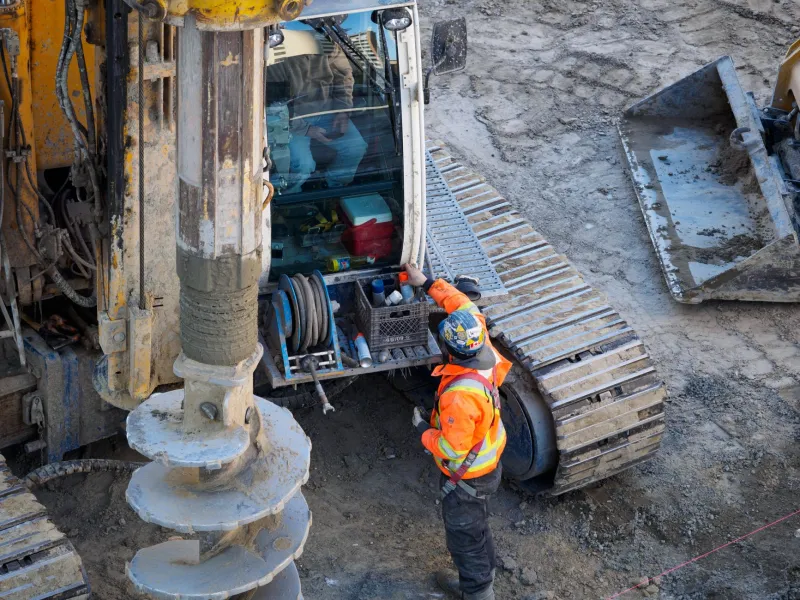
For years, the dominant narrative around Bakken competitiveness has centered on two variables: how efficiently a company can put a bit in the ground and how well its hedging book is positioned when crude prices move. Both matter enormously. But a third variable—one that rarely earns its own slide in an investor presentation—has quietly grown into a genuine differentiator. The ability to move product reliably, cost-effectively, and at scale from wellhead to market is no longer a background function. It is, for a growing number of operators, a primary competitive lever.
The unglamorous reality of oil production is that crude doesn't sell itself the moment it surfaces. It has to travel. And in the Bakken, where pipeline infrastructure remains unevenly distributed and gathering systems still have gaps, that travel often depends on rail access agreements and trucking fleets that most outsiders never think about. The operators who have figured this out are quietly building moats. The ones who haven't are finding out the hard way.
Why Transportation Has Become a Strategic Battleground
The Bakken's geography has always made logistics complicated. Straddling western North Dakota and eastern Montana, the basin sits far from major refining centers on both coasts. Pipeline buildout has improved the situation considerably over the past decade, but capacity constraints and geographic gaps mean that a significant share of production still depends on alternative transportation modes—particularly in basin-edge acreage where gathering infrastructure is thinner.
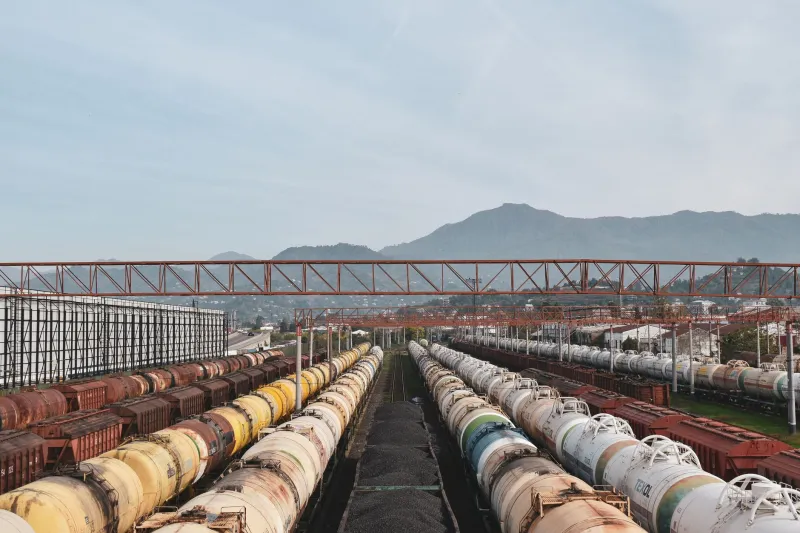
Rail once carried the majority of Bakken crude during the production surge of the early 2010s. That share dropped sharply as pipeline capacity expanded, but rail has not disappeared. It has evolved into a flexible, optionality-preserving tool that sophisticated operators use to access premium markets on the Gulf Coast or East Coast when pipeline differentials widen. The companies that maintained their rail relationships through the lean years are now able to flip a switch that competitors simply cannot reach.
Trucking plays a different but equally critical role, particularly in the first and last miles of the transportation chain. Gathering pipelines don't reach every pad, and even where they do, trucking often handles produced water, sand, chemicals, and other operational inputs that keep wells running. An operator whose trucking relationships are fragmented, transactional, or capacity-constrained during a regional crunch is an operator whose costs spike at exactly the wrong moment.
The Hidden Cost of Logistics Neglect
The financial impact of poor logistics positioning rarely shows up cleanly in reported numbers, which is part of why it receives less attention than it deserves. Instead, it manifests across multiple cost centers in ways that are easy to attribute elsewhere.
When trucking capacity tightens during a busy drilling season—a recurring dynamic in the Bakken, where activity tends to cluster—operators without committed fleet relationships pay spot rates that can be substantially higher than contracted equivalents. That premium, multiplied across hundreds of loads per month, adds up to material dollars. Similarly, operators without flexible rail access are price-takers in the pipeline market. When basin differentials widen due to pipeline congestion or maintenance, they absorb the full impact. Operators with rail optionality can partially offset that exposure by diverting volumes to markets where their crude commands better netbacks.
There is also a less visible but equally real cost: operational disruption. An operator who cannot reliably move produced water away from a pad may be forced to curtail production. A company whose sand supply chain depends on spot trucking availability during a tight market may experience completion delays that push first-oil dates back by weeks. These are not dramatic failures. They are quiet margin erosions that compound over time.
How Leading Operators Are Structuring Their Logistics Positions
The most sophisticated Bakken operators have moved beyond treating transportation as a procurement function and begun treating it as a strategic partnership portfolio. That shift looks different depending on company size and acreage position, but several common patterns have emerged.
Long-term volume commitments with trucking companies—sometimes accompanied by equity stakes or co-investment arrangements—have become more common among larger independents. These structures give carriers the revenue certainty to invest in fleet expansion and maintenance while giving operators guaranteed capacity and preferential pricing. In a tight market, that capacity guarantee is worth considerably more than its face value.
On the rail side, operators with significant production volumes have worked to secure loading terminal access agreements that provide both physical throughput and scheduling priority. Some have gone further, investing directly in transloading infrastructure to reduce dependence on shared facilities. The capital outlay is real, but so is the competitive insulation it provides.
Smaller operators, who lack the scale to pursue dedicated fleet arrangements or terminal investments, are finding that regional logistics consortiums offer a partial substitute. By pooling volume commitments with non-competing peers, they can access contracted capacity and pricing that would otherwise be unavailable at their individual scale. This model is still maturing in the Bakken, but early participants report meaningful cost advantages over the spot market.
Technology as a Force Multiplier in Logistics
The logistics revolution in the Bakken is not purely about physical infrastructure. Digital tools are playing an increasingly important role in how operators manage and optimize their transportation networks.
Route optimization software, real-time load tracking, and predictive dispatch systems have made trucking fleets meaningfully more efficient over the past several years. Operators who have integrated these tools into their field operations report measurable reductions in truck cycle times and idle hours—improvements that translate directly into lower per-barrel transportation costs. For produced water, where volumes are large and margins on disposal economics are thin, these efficiencies matter considerably.
On the rail side, data-sharing agreements between operators and rail carriers are enabling better car utilization and reducing the demurrage charges that have historically been a significant hidden cost. Some operators are also using price signal analytics to time their rail shipments more effectively, routing volumes to markets when the netback advantage justifies the premium transportation cost.
What the Logistics Gap Means for Competitive Positioning
The operators who have made serious, sustained investments in logistics infrastructure and partnerships are not just saving money on transportation. They are building structural advantages that are difficult for competitors to replicate quickly. Contracted capacity, terminal access rights, and established carrier relationships take time to develop. An operator that decides today to prioritize logistics strategy will not achieve parity with a peer who started that work three years ago by next quarter.
This dynamic has implications for how Bakken companies think about capital allocation. Transportation infrastructure investment has historically competed poorly against drilling capital in internal budget battles—the returns are less dramatic and the timeline to value is longer. But the operators who have shifted that calculus, treating logistics not as overhead but as a source of durable competitive advantage, are demonstrating that the math can work.
For energy leaders watching the Bakken's next chapter unfold, the lesson is increasingly clear: the battle for margin is not fought only at the wellhead. It is fought in rail yards, on county roads, and in the contract negotiations that determine who can move product when and at what cost. The companies treating those battles seriously are the ones worth watching.