Boarding Passes and Barrel Prices: What Two Decades of Executive Travel Data Say About the Bakken
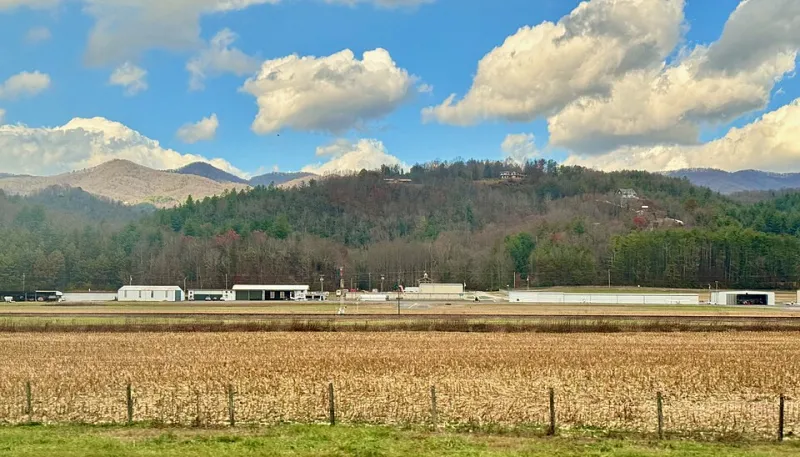
Photo: Harrison Keely, CC BY 4.0, via Wikimedia Commons
The Metric Nobody Spins
Every industry publishes confidence indicators. The Bakken has rig counts, permit volumes, and earnings calls. But there is a quieter dataset that may be more honest than all of them: the travel behavior of the people writing the checks.
When a company believes in a play, its executives fly in. They walk the acreage, tour the facilities, and take the mid-morning flight back to Houston or Denver. When belief fades, the travel stops first—before layoffs, before rig releases, before any public announcement. Corporate travel, in this sense, functions as a leading indicator of capital deployment.
The 2008–2014 Ascent
The record from travel industry data and regional airport statistics shows a familiar arc. Through the late 2000s, executive traffic into the Bakken's service hubs was modest—characteristic of a play viewed as a secondary asset in most portfolios. Then the shale revolution changed the calculus.
Between roughly 2010 and 2014, the region experienced a travel boom that mirrored its production boom. Hotel occupancy in hub cities like Williston and Minot ran at or near full capacity for extended stretches, with corporate travelers displacing leisure bookings at premium rates. Air service expanded in response: new routes, larger aircraft, and carriers adding capacity to markets that had never supported it before.
The composition of travelers shifted as well. Early in the boom, the flights carried engineers and landmen. By the peak, they carried board members, sovereign wealth delegations, and acquisition teams from every major. The Bakken had become a destination, and the travel data showed it before most press coverage did.
The 2015 Collapse
The downturn that followed the 2014 price crash registered in travel statistics with remarkable speed. Occupancy rates in key hub markets fell from sustained peaks into the sixty-percent range within roughly two years, and air service contracted in step—routes canceled, frequencies cut, aircraft downsized.
What makes this period instructive is the sequencing. Travel reductions began materially before the deepest operational cuts. Companies that would later announce retrenchments had already stopped sending leadership to the basin months earlier. The boarding pass data was the early warning system.
The Long Recovery
The recovery since has been slower and structurally different from the original boom. Executive travel to the region has rebuilt along more disciplined lines: fewer speculative visits, more purposeful ones. Where the 2012 traveler might have come to evaluate acreage, the modern traveler arrives to inspect producing assets, meet service partners, or attend the region's growing conference calendar.
Hotel data reflects this shift. Occupancy no longer reaches boom-era extremes, but it is more stable, supported by recurring events and steady operational traffic rather than speculative surges. The traveler mix has also diversified—renewables developers, data-center scouts, and mineral rights investors now share airport shuttles with traditional oil and gas leadership.
What Today's Numbers Suggest
Current trends point to a basin entering a mature phase of its investment cycle. Travel growth is steady rather than explosive, concentrated around scheduled industry gatherings and asset-level diligence rather than land-rush speculation. That pattern historically precedes consolidation-driven activity: acquirers visiting targets, lenders visiting borrowers, and boards visiting assets they intend to hold for decades.
The Bakken's next investment wave, if the travel data is a reliable guide, will be built less on exploration and more on optimization—capital flowing toward efficiency, infrastructure, and adjacent resource plays. The executives are already on the planes. The question is what they're coming to buy.