Beneath the Surface: How Subsurface Data Ownership Is Becoming the Bakken's Most Contested Competitive Weapon
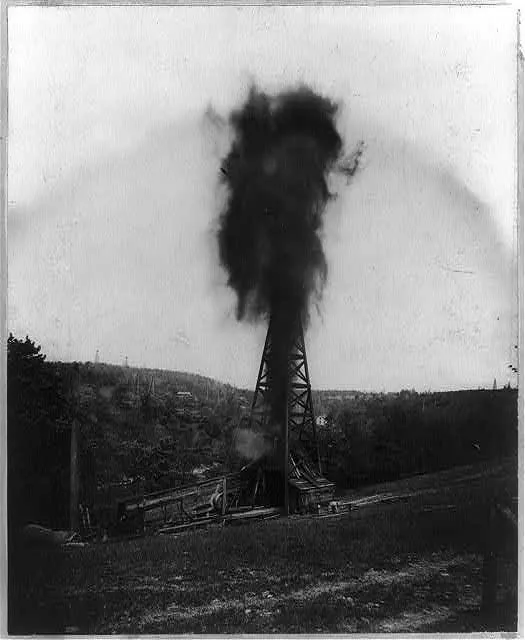
Photo: Miscellaneous Items in High Demand, PPOC, Library of Congress, Public domain, via Wikimedia Commons
For decades, the competitive conversation in the Bakken centered on acreage position, rig efficiency, and capital access. Those variables still matter. But a quieter contest has been building beneath the surface—one measured not in barrels per day or lease bonuses, but in terabytes of proprietary geological intelligence. Operators who recognized this shift early have been accumulating an advantage that is, by its very nature, invisible to those who did not.
Subsurface data—seismic surveys, core samples, formation logs, pressure readings, and the decades of well performance records that flow from active drilling programs—has always been valuable. What has changed is the industry's capacity to process, cross-reference, and extract predictive insight from that data at a scale and speed that was not commercially viable even ten years ago. The result is a widening gap between operators who have invested in building robust proprietary data libraries and those who have relied on publicly available information or purchased third-party datasets.
The Asymmetry Advantage
The concept of information asymmetry is well understood in financial markets. In the Bakken, it is increasingly relevant to how acreage is priced, acquired, and developed. An operator sitting on twenty years of core data from a specific formation corridor does not simply know more than a competitor—it knows things the competitor cannot easily replicate, regardless of capital investment.
This asymmetry manifests in several concrete ways. During acreage acquisitions, operators with deep subsurface intelligence can identify undervalued parcels that others pass over, or avoid overpaying for acreage that looks attractive on the surface but carries hidden geological risk. In farm-out negotiations, proprietary data can serve as a non-cash contribution that commands premium deal terms. And in joint venture discussions, the operator with superior subsurface knowledge often controls the technical narrative—which translates directly into operational authority and economic upside.
The strategic implication is significant: data is no longer merely a tool for making better drilling decisions. It has become a negotiating asset with measurable transaction value.
Digitization as Infrastructure
For many Bakken operators, the most pressing challenge is not the acquisition of new data but the organization of what they already possess. Legacy seismic surveys stored on outdated media formats, paper well logs from early-stage exploration, and core samples housed in physical repositories represent enormous latent value—but only if they can be digitized, standardized, and integrated into modern analytical frameworks.
This is driving significant investment in data management infrastructure across the region. Operators are hiring geospatial data scientists, partnering with technology firms specializing in subsurface analytics, and building cloud-based repositories designed to support machine learning applications. The goal is not simply to preserve historical records but to transform them into forward-looking predictive tools.
The economics of this investment are compelling. Improved subsurface modeling reduces dry hole risk, optimizes well spacing decisions, and enables more precise completion designs. In a formation as laterally variable as the Bakken, even marginal improvements in geological prediction can translate into meaningful differences in initial production rates and long-term recovery factors.
Legal Complexity in a Shared Basin
Data ownership in the Bakken is not a straightforward matter. Subsurface intelligence is generated through activity on leased acreage, often in proximity to—or in partnership with—other operators. The legal frameworks governing who owns what, and under what circumstances it can be shared or withheld, are frequently ambiguous and increasingly contested.
Joint operating agreements may include data-sharing provisions that were written before the current analytical capabilities existed, creating interpretive disputes about what those provisions actually require. Farmout agreements sometimes grant data access rights to incoming partners that original operators later regret. And state regulatory requirements to submit well data to public databases mean that a portion of every operator's proprietary intelligence eventually enters the public domain—though the timing and scope of those disclosures vary.
Legal counsel with specific expertise in energy data rights is becoming a standard fixture in major Bakken transactions. Operators are also investing in contractual architecture that clearly delineates data ownership from the outset of any partnership, rather than attempting to resolve ambiguities after a dispute arises.
The Collaboration Dilemma
Perhaps the most strategically complex dimension of subsurface data ownership is the tension between competitive protection and regional benefit. The Bakken is a basin with shared geological characteristics across operator boundaries. Pooled data—particularly seismic coverage integrated across multiple acreage positions—can produce geological models that are substantially more accurate than any single operator could generate independently.
Industry consortia and academic partnerships have demonstrated this value repeatedly. When operators contribute data to regional studies, the collective output often improves everyone's understanding of formation behavior in ways that benefit all participants. The challenge is that the operators with the richest data libraries have the least to gain from sharing and the most to lose if their proprietary intelligence effectively subsidizes a competitor's decision-making.
This tension is not easily resolved, but some operators are finding pragmatic middle ground. Selective data-sharing arrangements—in which operators contribute older or less operationally sensitive datasets while retaining exclusivity over recent, high-resolution intelligence—allow participation in collaborative initiatives without surrendering current competitive advantage. Others are exploring data licensing structures that provide financial compensation in exchange for access, effectively monetizing their subsurface libraries as a standalone revenue stream.
Implications for Acreage Valuation
As subsurface data becomes more explicitly recognized as a competitive asset, its influence on acreage valuation is growing. Buyers conducting due diligence on Bakken acquisitions are increasingly asking not just about production history and reserve estimates, but about the quality and completeness of the data library that accompanies the acreage.
In some transactions, the data package has become a material factor in purchase price negotiations—particularly in situations where the subsurface intelligence is more current, more comprehensive, or more analytically processed than what the buyer could independently obtain. This is a relatively recent development, and the industry has not yet established standardized frameworks for quantifying data value in transaction contexts. But the direction of travel is clear.
For smaller operators and new entrants, this dynamic creates a meaningful barrier to competitive parity. Building a proprietary subsurface data library takes time and sustained drilling activity—resources that are not equally distributed across the operator landscape.
A New Dimension of Strategic Planning
The emergence of subsurface data as a strategic asset requires Bakken operators to think about information governance with the same rigor they apply to capital allocation or reservoir engineering. That means establishing clear internal policies for data classification and access, investing in the technical infrastructure to make data analytically useful, and developing legal frameworks that protect proprietary intelligence across the full lifecycle of partnerships and transactions.
It also means recognizing that the value of subsurface data compounds over time. Operators who begin building and organizing their data libraries today are not just improving current decision-making—they are constructing a competitive asset that will appreciate as analytical capabilities continue to advance.
In a basin where the easy geology has already been drilled, the operators who understand what lies beneath the surface—and who own the intelligence to prove it—will hold a durable advantage that no competitor can simply lease or acquire.