Priced Out of the Play: How Surging Acreage Costs Are Redrawing the Bakken's Competitive Map
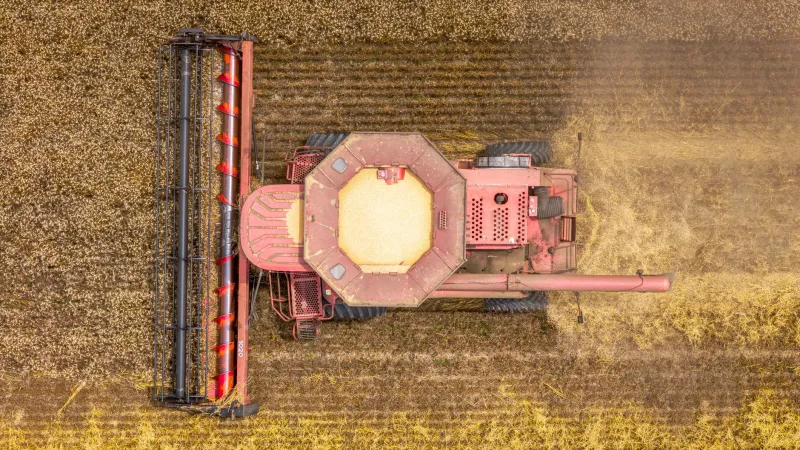
For much of the Bakken's modern development era, the calculus of land acquisition followed a familiar logic: identify prospective acreage, negotiate lease terms, and trust that subsurface value would justify surface cost. That equation is under increasing strain. As agricultural land values in North Dakota and eastern Montana have climbed—driven by commodity cycles, speculative interest, and competition from non-oil land users—operators are discovering that the price of getting into the play has become a material constraint on whether they can profitably stay in it.
This is not a crisis that announces itself loudly. There are no headlines when a mid-sized independent quietly declines to bid on a lease package because the math no longer pencils. But across the basin, those quiet decisions are accumulating into a pattern that is reshaping exploration economics in ways the industry has not fully reckoned with.
The Numbers Behind the Squeeze
North Dakota farmland values have risen substantially over the past decade, with certain counties in the heart of the Williston Basin seeing per-acre prices that would have been unthinkable during the basin's early development years. While precise figures fluctuate with agricultural commodity markets and interest rates, the directional trend is clear: land is more expensive, and it is not becoming cheaper.
For oil operators, this matters in two distinct ways. First, surface lease agreements—which govern the right to use land for drilling operations, roads, and facilities—have become more costly to negotiate and more contentious to secure. Landowners who once viewed oil royalties as a straightforward supplement to farm income now have more leverage and, in some cases, competing offers from other land users. Second, the acquisition of mineral rights themselves, when they are available for private purchase, has attracted significant capital from non-operating investors, driving up prices in ways that compress returns for working-interest participants.
The result is a widening gap between the theoretical value of a Bakken well and the all-in cost of accessing the geology beneath it.
Consolidation as a Response—and a Risk
For larger operators with established acreage positions and the balance sheet to absorb higher entry costs, rising land values are not an existential problem—they are a barrier that works in their favor. When smaller competitors cannot afford to acquire new acreage or extend existing leases, the logical beneficiaries are the major leaseholders who already control prime drilling inventory.
This dynamic is accelerating consolidation in the basin in ways that differ from the headline-grabbing corporate mergers that have drawn attention in recent years. Rather than dramatic acquisitions, what is occurring in many cases is a quieter attrition: smaller operators allowing marginal acreage to lapse, concentrating their capital on core positions, and effectively ceding the edges of the play to whoever can afford to hold them.
The strategic risk in this consolidation is that it reduces experimentation. When fewer operators control more acreage, the basin loses some of the competitive diversity that historically drove innovation in completion techniques, well spacing strategies, and geological targeting. Majors optimize; independents explore. A basin dominated by the former may be more efficient in the near term but less adaptive over time.
Alternative Strategies for the Mid-Sized Operator
Not every mid-sized independent is accepting this landscape passively. Several emerging strategies are gaining traction among operators who are determined to remain competitive without matching the land-acquisition firepower of their larger peers.
Joint development agreements have become an increasingly common mechanism for spreading acreage costs across multiple parties. By partnering with non-operating working-interest holders or other operators with complementary acreage positions, companies can participate in drilling programs that would otherwise exceed their individual capital thresholds.
Geological targeting below the primary Bakken formation is another avenue drawing renewed attention. The Three Forks interval and deeper Lodgepole targets, while historically less productive than the Middle Bakken, are attracting interest from operators willing to accept different risk profiles in exchange for lower entry costs in less competitive acreage markets.
Data-driven acreage screening is also changing the acquisition calculus. Operators with sophisticated subsurface analytics capabilities can identify parcels where geological indicators suggest above-average productivity potential—allowing them to bid selectively and confidently rather than competing for acreage on the basis of location alone.
The Landowner Relationship as Strategic Asset
Perhaps the most underappreciated dimension of the acreage cost challenge is the human one. Behind every surface lease negotiation is a landowner—often a farm family with multigenerational ties to the land and legitimate concerns about how industrial activity affects their property and livelihood.
Operators who have invested in genuine, sustained relationships with surface stakeholders are finding that those relationships translate into tangible competitive advantages when lease renewals come due or new acreage becomes available. Landowners who trust an operator's track record on reclamation, communication, and payment reliability are more likely to offer favorable terms than those dealing with an unfamiliar company in a purely transactional context.
In a market where acreage costs are rising across the board, the ability to secure leases at below-market rates through relationship equity is a form of competitive differentiation that does not appear on a balance sheet but absolutely affects returns.
What Rising Costs Reveal About the Basin's Maturity
At a broader level, the pressure that rising land acquisition costs are placing on Bakken economics reflects something important about where the basin stands in its development arc. The Bakken is no longer a frontier play where early movers can establish positions at minimal cost and wait for geology to deliver returns. It is a mature, competitive, and increasingly expensive operating environment where the margin for strategic error is narrow.
That maturity is not a reason for pessimism. The basin's underlying geology remains prolific, its infrastructure is substantially built out, and the operational knowledge accumulated over two decades of development gives established participants real advantages. But it does mean that the strategies that worked in the Bakken's early years—acquire broadly, develop opportunistically, rely on rising commodity prices to bail out marginal decisions—are no longer adequate.
The operators who will define the next chapter of Bakken development are those who approach land acquisition with the same analytical rigor they apply to reservoir engineering: understanding costs precisely, targeting selectively, and building positions that generate returns across a range of market conditions rather than only at the top of the cycle.