Common Ground, Competing Claims: When Wind, Solar, and Oil Converge on the Same Bakken Acre
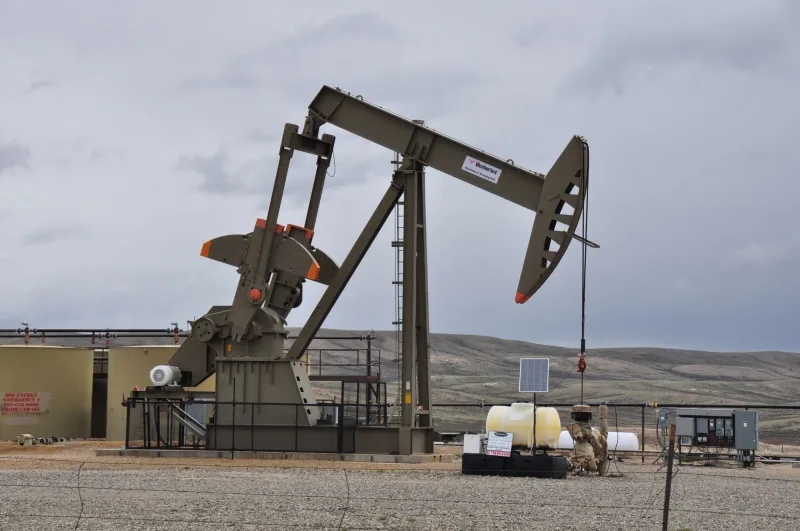
The Bakken is not typically imagined as a renewable energy landscape. Its identity is bound up in crude oil, in the flares visible from space, in the roughnecks and rigs that built a twenty-first-century boomtown across the northern Great Plains. Yet the same geographic and geological attributes that made the Williston Basin a world-class oil province—its expansive, relatively flat terrain, sparse population, and proximity to transmission infrastructure—are also making it an increasingly attractive destination for wind and solar development.
This convergence is creating a new kind of competitive dynamic that most oil operators were not anticipating and are only beginning to understand. The challenge is not simply that renewable projects occupy land that might otherwise be drilled. It is that they are fundamentally altering the incentive structures of landowners, complicating the permitting environment for long-term oil development, and in some cases physically constraining the surface access that drilling programs require.
How the Competition Unfolds on the Ground
The mechanism through which renewable energy development intersects with oil operations is primarily the landowner relationship. In the Bakken, as in most of the American West, surface rights and mineral rights are frequently severed—meaning a single parcel of land may have one owner above ground and another below it. Oil operators negotiate surface use agreements with surface owners; renewable developers do the same.
When a wind developer approaches a North Dakota or Montana landowner with a long-term lease offer—often structured as a fixed annual payment per turbine or per acre, with terms running twenty-five to thirty years—the landowner faces a choice that is not always straightforward. Oil royalties can be lucrative, but they are variable and tied to production timelines that operators control. Wind and solar lease payments, by contrast, offer predictability that agricultural operations genuinely value.
For landowners who have watched oil prices swing between forty and one hundred twenty dollars per barrel within a single decade, the appeal of a guaranteed income stream is not trivial. And as more landowners enter into renewable energy surface agreements, the pool of unencumbered acreage available for oil development—and the terms on which it can be accessed—begins to shift.
Fragmented Incentives and Permitting Complexity
Beyond the individual landowner negotiation, renewable energy development is introducing new layers of complexity into the permitting and regulatory environment that oil operators navigate.
In North Dakota, the siting of large wind and solar facilities requires state-level review under the Industrial Commission and, for projects above certain capacity thresholds, the Siting Board. These processes can take years and involve public comment periods that elevate the visibility of surface use conflicts. When an oil operator's proposed well pad or access road intersects with an approved or pending wind project footprint, the resulting jurisdictional questions can delay development timelines significantly.
There is also the matter of grid infrastructure. Transmission lines and substations represent shared assets that both oil and renewable developers depend upon in different ways—oil for power supply to production facilities, renewables for electricity export. In parts of the Bakken where grid capacity is constrained, competition for interconnection priority can influence which projects move forward and which are delayed.
The Operators Finding Opportunity in the Tension
Not every oil company operating in the Bakken views renewable energy development as an adversarial force. A cohort of forward-thinking operators is approaching the convergence differently, recognizing that the same landowners who host wind turbines also sit above oil-bearing formations—and that maintaining productive relationships with those landowners requires acknowledging, rather than dismissing, their interest in energy diversification.
Some operators have begun structuring surface use agreements that explicitly address the possibility of co-development, establishing clear protocols for how oil infrastructure and renewable installations can coexist on the same parcel. Others are exploring direct participation in renewable energy projects as a means of cementing landowner loyalty and generating revenue streams that offset the volatility of crude prices.
This is not purely altruistic. An operator who helps a landowner navigate a wind lease negotiation, or who actively supports a solar installation on non-productive surface acreage, earns a form of relational capital that translates into preferential treatment when drilling permits are sought, lease renewals are negotiated, or community opposition to new development arises.
Grid as Competitive Infrastructure
One dimension of the renewable energy convergence that deserves more attention from Bakken operators is the evolving role of electrical grid infrastructure. As wind and solar capacity expands across the region, transmission investment follows—and that investment can benefit oil operations in ways that are not immediately obvious.
Robust grid connectivity reduces the cost and complexity of powering remote production facilities, supports the electrification of compression and pumping equipment, and in some cases enables operators to participate in demand-response programs that generate additional revenue. Several Bakken producers have already begun evaluating how expanded renewable capacity in their operating areas could reduce their dependence on diesel generation and lower their overall cost structure.
This creates an alignment of interest between oil operators and renewable developers that is easy to overlook when the dominant narrative frames the two sectors as competitors. In practice, the infrastructure that renewable energy requires and the infrastructure that oil production benefits from overlap more than either industry typically acknowledges.
Rethinking the Stakeholder Map
Perhaps the most consequential implication of renewable energy's growing presence in the Bakken is what it demands of oil operators in terms of stakeholder sophistication. The traditional model—identify mineral rights, secure surface access, drill—assumed a relatively simple landowner relationship and a regulatory environment shaped primarily by oil industry norms.
That environment no longer exists in its original form. Landowners today have more options, more information, and more leverage than they did a decade ago. Regulators are managing a more complex array of competing land uses. And communities that once evaluated energy development primarily through the lens of oil royalties and employment are now weighing a broader set of considerations that include long-term land use, environmental commitments, and energy transition narratives.
Operators who recognize this shift and adapt their stakeholder strategies accordingly will be better positioned to maintain the surface access their drilling programs require. Those who treat renewable energy development as an intrusion to be managed, rather than a reality to be incorporated into their long-term planning, are likely to find the competitive landscape increasingly difficult to navigate.