Reading the Room: Why the Bakken's Conference Corridors Predict the Next Twelve Months Better Than Any Rig Count
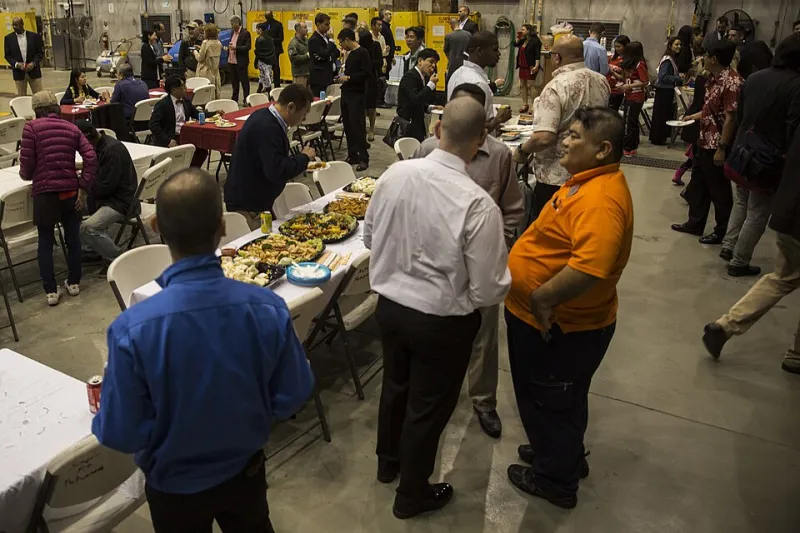
Photo: Cpl. Royce Dorman, Public domain, via Wikimedia Commons
Every week, someone publishes a rig count. Every week, analysts treat it as gospel. And every week, the people who actually allocate capital in the Williston Basin make decisions based on something the spreadsheets will never capture: the mood of the room.
After another season of regional energy gatherings across North Dakota and Montana, one thing is increasingly clear to those of us who watch this industry closely. The conferences—the panels, the coffee lines, the handshakes in the hallway—are quietly outperforming the traditional metrics as predictors of what the Bakken will do next.
The Rig Count Is a Rearview Mirror
Rig counts are lagging indicators dressed up as leading ones. By the time a rig shows up in the weekly data, the leasing decision, the capital committee approval, and the vendor contracts are all months behind us. The count reflects commitments already made, not the ones forming.
Conference attendance works differently. When service company executives show up early and stay late, something is stirring. When the private equity badges outnumber the operators' badges, capital is hunting. And when the same midstream manager takes three separate meetings near the exhibit hall in a single afternoon, you can reasonably infer that a deal is being assembled.
What This Season's Hallways Are Saying
Conversations at recent gatherings suggest three signals worth taking seriously.
First, hiring talk has returned—but cautiously. Several operators described adding crews in narrow terms: specific basins, specific well inventories, no speculative buildout. That is the language of companies confident about the next four quarters but unwilling to bet the balance sheet on the next four years.
Second, the M&A chatter has shifted from desperation to arithmetic. A year ago, consolidation conversations carried the smell of distress. Today, they sound like portfolio management—sellers negotiating from strength, buyers paying up for inventory quality rather than discount prices.
Third, the side-deal economy is thriving. The most telling activity at any conference happens in reserved meeting rooms and restaurant booths away from the main stage. This season, those rooms were booked. When the informal economy of a conference is that active, formal announcements tend to follow within two or three quarters.
A Better Barometer for the Region
For the communities, service firms, and royalty holders who depend on Bakken activity, learning to read these signals is not a parlor trick—it's planning infrastructure. A chamber director who notices which companies sent senior leadership to the spring gathering can anticipate hiring. A service firm that tracks which operators are taking meetings with midstream representatives can position itself ahead of the contracts.
None of this replaces rigorous analysis. But the conference circuit, taken as a whole, functions as the basin's real-time sentiment index—unfiltered, unmodeled, and weeks ahead of the official data.
The next time someone quotes a rig count at you, ask a better question: who was in the hallway, and who did they meet with? The answer will probably tell you more about the next twelve months than the number ever will.