Room Keys and Rig Talk: How Williston's Hospitality Strip Became the Basin's Unofficial Conference Hall
Photo: JIP, CC BY-SA 4.0, via Wikimedia Commons
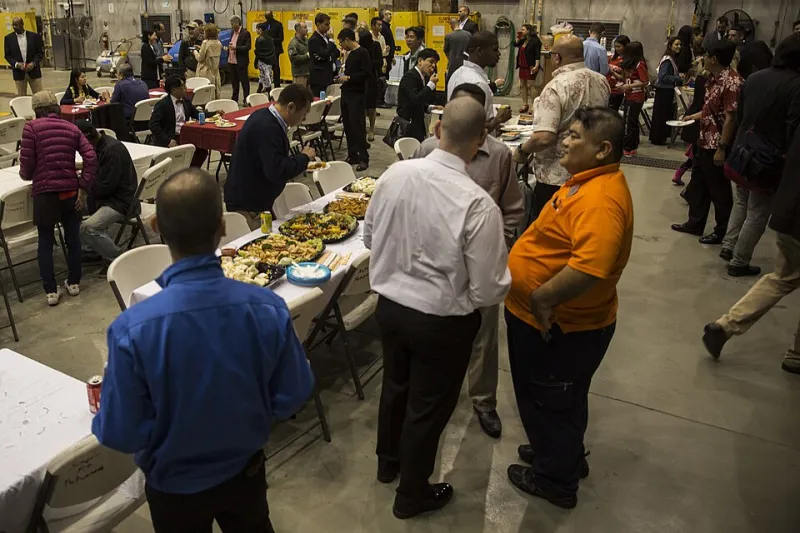
There is no convention center in Williston. No gleaming events campus, no glass atrium with a sponsor logo on the floor. And yet, on any given week between October and April, the city's hotels function exactly like one. Lobbies hum with vendor demos. Banquet rooms host capital-markets briefings. The breakfast bar doubles as a deal-flow pipeline.
The Bakken built its conference economy by accident, out of necessity, and largely without anyone planning it. Understanding how that happened—and what it means for the next decade of energy gatherings—is essential for anyone who does business in this basin.
From Man Camps to Meeting Rooms
During the boom years, Williston's hospitality sector existed for one reason: beds. Thousands of them, fast, for workers who needed to sleep between shifts. Event space was an afterthought, if it was thought about at all.
The bust changed the calculus. As drilling activity contracted and hotel occupancy collapsed, properties that had been built for throughput had to find new revenue. Many discovered that the same ballrooms and meeting rooms that had sat empty could be repurposed. Safety summits. Vendor trade days. Landowner meetings. Operator breakfasts. The infrastructure was already there; it just needed programming.
What emerged was something unusual in American energy: a conference circuit embedded directly inside the oilfield it serves. Attendees can tour a well site in the morning, hear a midstream update at lunch, and be back in their hotel room by four. In Houston or Denver, the Bakken is a slide deck. In Williston, it is out the window.
The Case for Showing Up in Person
Skeptics ask a fair question: with video calls cheap and travel budgets tight, why fly to western North Dakota at all?
The answer, according to operators and service companies that regularly attend basin events, is density of access. A single day in Williston can put an independent producer in front of the state regulators, midstream executives, service providers, and county officials who actually approve, build, and service their projects. No virtual platform compresses those relationships the same way.
There is also a credibility dividend. Companies that show up in the basin—rather than observing it from a distance—signal commitment to local partners, landowners, and municipal leaders. In a region where community trust increasingly functions as a business asset, that signal matters.
What the Next Generation of Bakken Events Must Deliver
The informal conference economy now faces a maturity test. Attendees will keep making the trip north only if the value proposition is explicit. Three things stand out:
- Content that can't be found elsewhere. Basin-specific data, regulatory previews, and operator case studies—not generic industry keynotes that could be delivered anywhere.
- Structured access. Curated matchmaking between capital, operators, and service firms, so networking happens by design rather than by chance at the coffee station.
- Field exposure. Site visits and live demonstrations that no Houston ballroom can replicate.
The hotels built this ecosystem without intending to. The organizations that now program it deliberately—treating Williston, Watford City, and Dickinson as genuine conference destinations rather than pit stops—will own the basin's most defensible meeting ground. The rooms are already there. The only question is who fills them with purpose.